Compal doesn’t build systems just to meet regulations, we build systems to safe lives.
These visibility limitations are not just operational challenges. They are now reflected in evolving safety requirements, including NHTSA FMVSS 127.
In April 2024, the U.S. National Highway Traffic Safety Administration (NHTSA) introduced FMVSS 127, requiring that all passenger vehicles include pedestrian automatic emergency braking (P-AEB) systems capable of operating both day and night by 2029.
The regulation highlights a known limitation of visible light cameras and radar perception: pedestrians often become difficult to detect in darkness, glare, fog, rain, snow, and low light environments, especially when outside the reach of headlamps and other sensors.
Infrared-based perception directly addresses this challenge by detecting heat signatures rather than reflected light, enabling consistent pedestrian visibility down to complete darkness (0 lux). When detection occurs earlier, safety systems have more opportunity to respond, supporting collision avoidance.
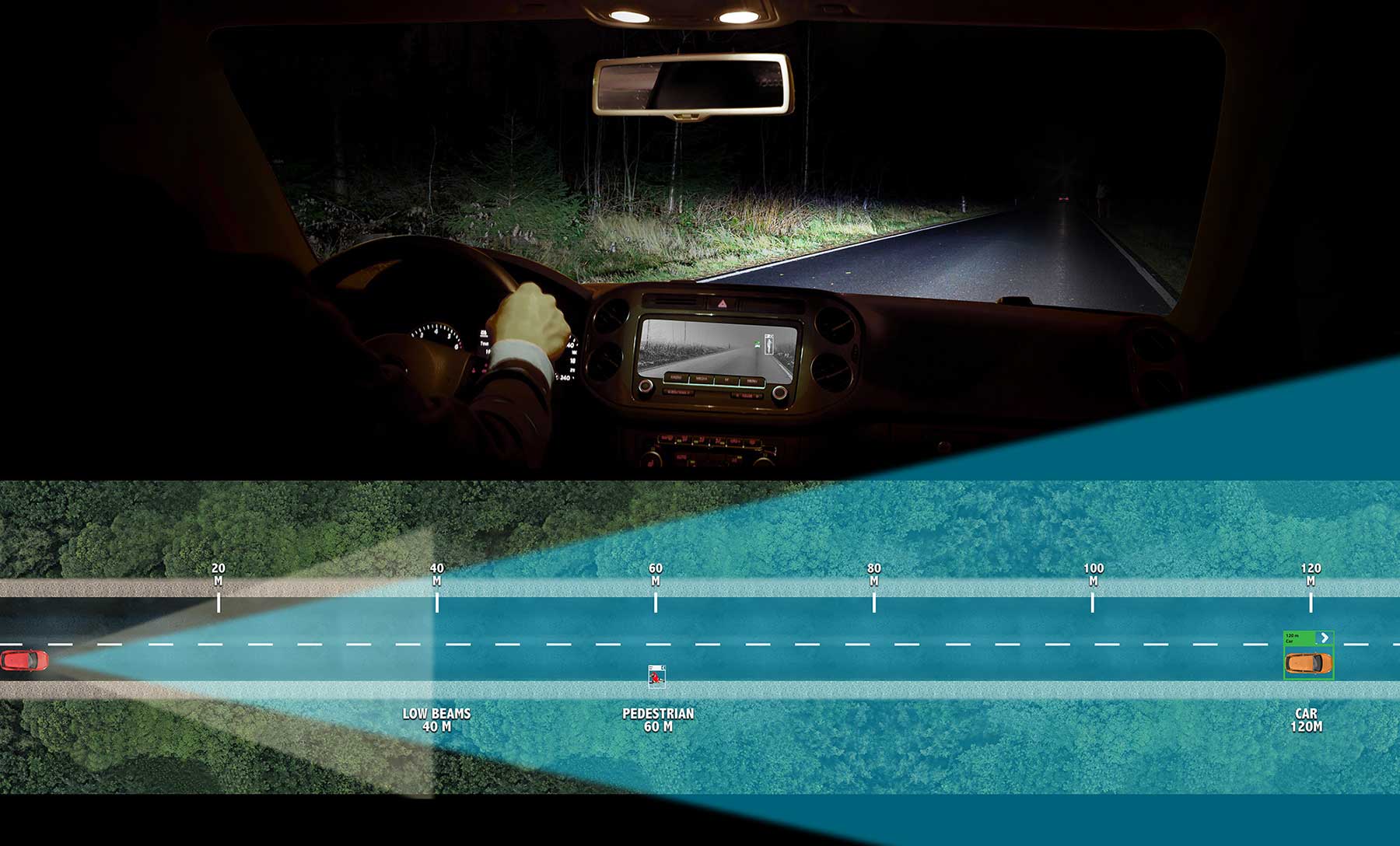
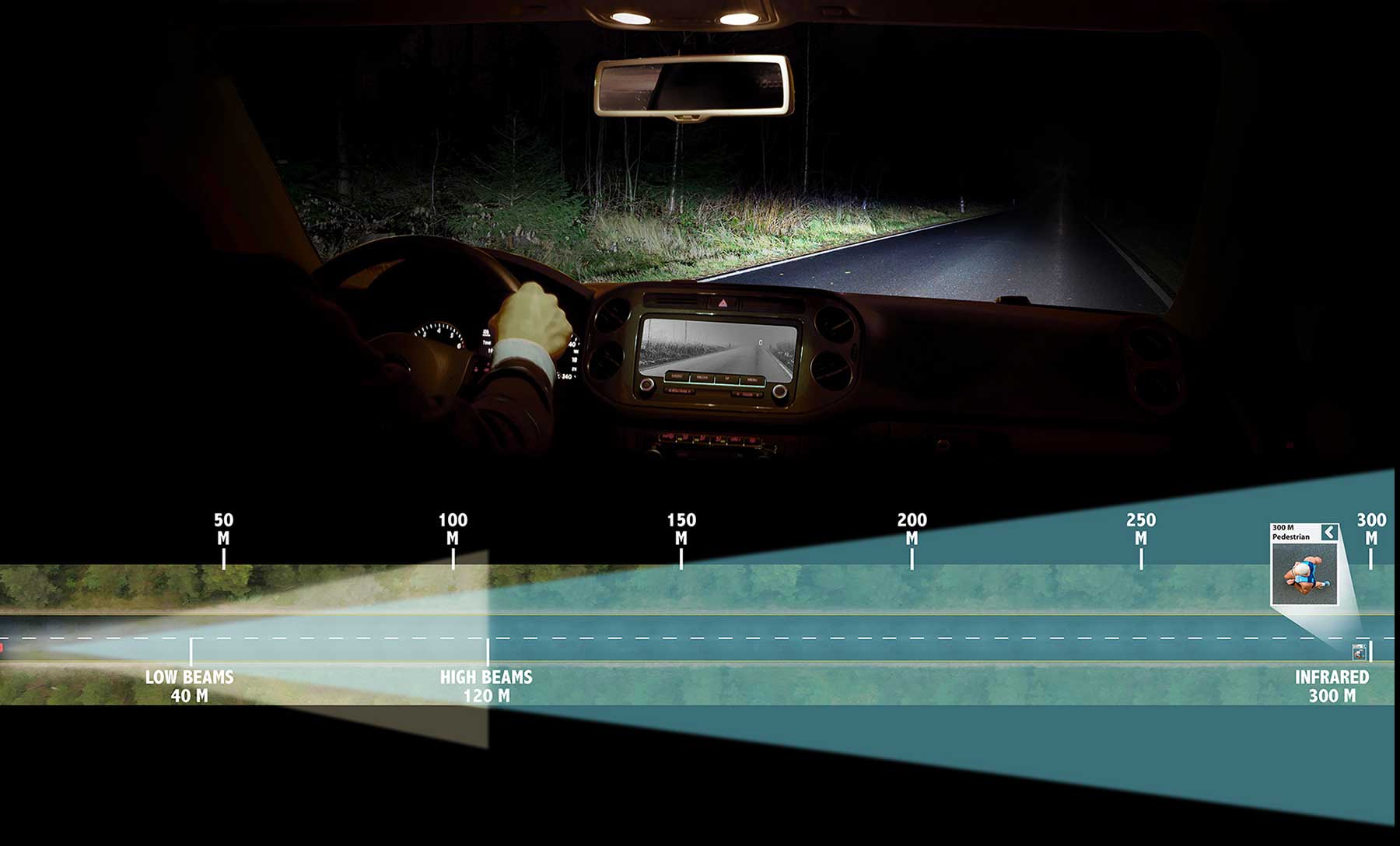
FMVSS 127 establishes performance requirements for pedestrian automatic emergency braking (P-AEB) systems at speeds up to 60 km/h. The regulation requires that a vehicle detect a child pedestrian and apply braking early enough to avoid contact, including during nighttime conditions. Test procedures include both straight-line crossings and scenarios where the pedestrian is partially obscured. The standard fundamentally assumes reliable and timely pedestrian detection across a range of visibility environments, making consistency of perception critical to real-world performance.
| Expectation | Traditional Sensors | Infrared Advantages |
|---|---|---|
| Reliable Classification at Distance | Range limited by headlamp illumination, weather, and contrast | Infrared enables early classification in weather and all lighting conditions |
| Regulatory Robustness for No-Contact AEB | Late detection increases braking intensity | Earlier awareness supports smoother braking and no-contact outcomes |
| Reduce False Negatives / Missed Detections | Visual ambiguity in dark and/or reflective clothing, low contrast, cluttered scenes, and occluded pedestrians | High thermal contrast improves detection of pedestrians, cyclists, animals. |
| Operational Consistency Across Environments | Sensitive to illumination, sensor contamination, dynamic lighting | Infrared maintains consistent signal regardless of ambient light variation |
| Consistent Day & Night Performance | Performance drops in darkness, low light or low visibility | Detects independent of visible light, providing stable day/night classification. |

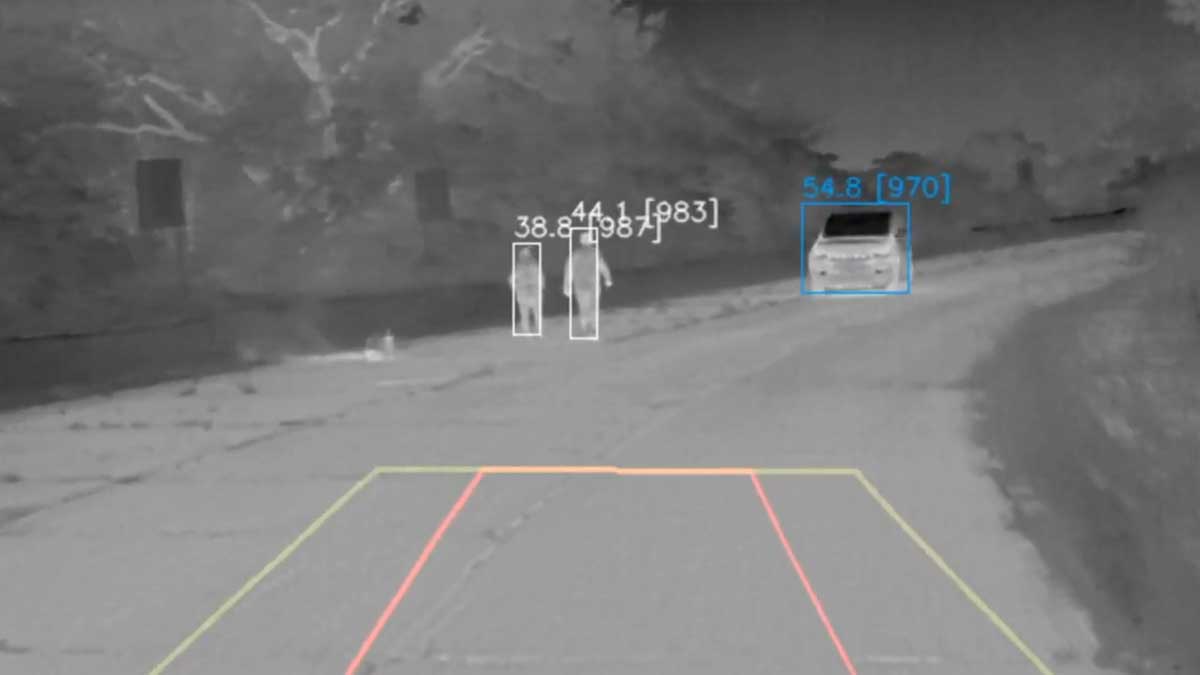
Infrared sensing exceeds the FMVSS 127 standard by sensing heat rather than reflected light. Infrared maintains pedestrian visibility in complete darkness (0-lux), glare, and other low-contrast conditions where visible cameras lose confidence. Its extended detection range, while supporting earlier awareness, helps drivers avoid pedestrians and reduce the abrupt braking events that can increase rear-end collision risk. Infrared helps close the real-world safety gaps that FMVSS 127 is designed to address, while also improving safety beyond the standard.
Compal ITS demonstrates how infrared‑based Pedestrian Automatic Emergency Braking (PAEB) meets the rigorous standards of FMVSS 127. These real‑world tests validate that infrared perception provides earlier detection, giving driver and vehicle safety systems more time to respond, helping OEMs meet today’s regulation while preparing for tomorrow’s safety expectations.

quick links