By combining infrared sensing with classification, distance estimation, and action prediction, CDAT™ (Classification · Distance · Action · Tracking) helps vehicles recognize and respond to pedestrians and road hazards in the environments where traditional sensors lose confidence. Designed for global platforms and emerging safety requirements, CDAT™ brings dependable perception to real world driving.
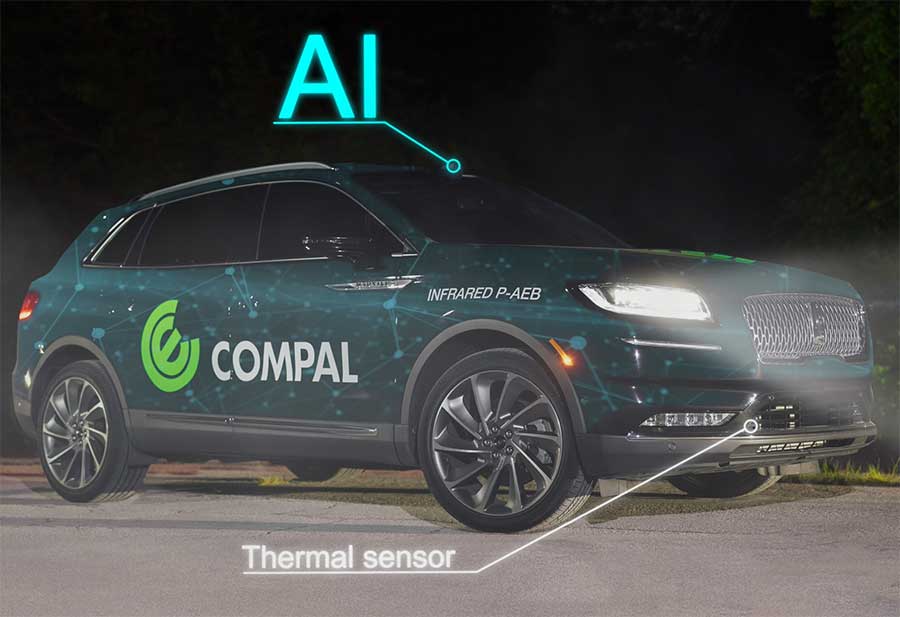
CDAT™ supports a wide range of ADAS and automated driving applications, from AEB (Automatic Emergency Braking) and FCW (Forward Collision Warning) to more advanced automation levels, including Level 2, 2+, hands-free driving, L3 “eyes-off/hands-off,” and beyond toward L4 autonomy. It is also designed to support regulatory requirements such as FMVSS 127, making it a robust candidate for OEMs targeting safety compliance.


CDAT™ is built on a modular, cross-platform perception architecture designed for global vehicle programs. Its models are optimized for efficient deployment across a range of hardware configurations, enabling consistent detection, tracking, behavior prediction, and distance estimation. CDAT™ gives OEMs a ready-to-integrate perception stack that elevates scene understanding and supports proactive safety decisions in real-world conditions.

quick links